Home » Shop » AIS Systems » AIT6000 – AIS Transponder with VHF Splitter, Alarms, NMEA 2000 & Wi-Fi

AIT6000 – AIS Transponder with VHF Splitter, Alarms, NMEA 2000 & Wi-Fi

£1,194.00

Description

AIT6000 - Class B+ AIS Transponder

Digital Yacht’s most advanced AIS transponder with an unmatched range of features and performance

Class B+ AIS Transponder

Built-in VHF Splitter

PLUS MORE FEATURES

Wi-Fi Interface

Built-in alarms

Compatible with Apps & Software

Compatible with MFDs & Chartplotters

NMEA 2000 Gateway

NMEA 0183, 2000 & USB Interfaces

Web Interface for Easy Configuration

SPAIS Enabled for Satellite Reception

THE ULTIMATE AIS TRANSPONDER

Class B+ AIS Transponder

The AIT6000 is a Class B+ AIS transponder. It uses Class B+ AIS standards using SOTDMA technology and has a 5W power output for increased range and better long range tracking.  SOTDMA technology is also used by AIS Class A transponders so the AIT6000 has the same priority when it comes to reserving a slot ensuring that it is always able to transmit reliably.

The transmission update varies depending upon the speed of the vessel wheras a regular Class B device just transmits every 30 seconds when underway.

SPAIS Enabled for Satellite Reception

Our latest Class B+ technology is now SPAIS enabled with additional messaging for the best satellite reception of AIS transmissions.   SPAIS is Digital Yacht’s proprietary and specialist technology that optimises messaging from the transponder to include long range satellite capability.

This functionality can be easily enabled from the set up menu and will prioritise your AIS transmissions for satellite reception. This is ideal for offshore and ocean sailors wanting the reassurance of land-based tracking even when more than 20NM from the coast and away from coastal/terrestrial network stations.

Integrated Antenna VHF Splitter

The AIT6000 incorporates a patented zero-loss VHF antenna splitter, enabling the main VHF antenna to be shared safely between the AIS transponder, the VHF radio and even a FM/DAB radio. Thanks to this technology, there is no loss of signal or data, guaranteeing optimum performance for all the equipment connected.

You connect the main VHF antenna directly to the AIT6000, which then redistributes the signal to your VHF radio using the coaxial cable supplied.

BUILT-IN COLLISION & ANCHOR ALARMS

Integrated into AIT6000 is a custom alarm for anchor drift using an algorithm to calculate the optimum drift radius based on depth and the scope of the chain for reliable notifications. There’s also an anti collision alarm based on CPA (closest point of approach) and TCPA (time to closest point of approach) AIS data. These alarms can be monitored through the wireless interface with attractive graphical displays of current status or NMEA 2000 Alerts can be sent to other devices on the network.

This allows sailors to receive critical collision-avoidance warnings even when a chartplotter is not in use. All features are accessed directly through a standard web browser, eliminating the need for complex software installation. There is a switched output on the AIT6000 power data cable which allows the alarm to attach to a sounder.

THE ONBOARD HUB FOR NAVIGATION

NMEA 2000, NMEA 0183 & USB Interfaces

AIT6000 has also been designed to become an onboard hub for navigation.  It features an NMEA 0183 interfaces for older, legacy chart plotters as well as NMEA 2000 for modern navigation systems.  It also has PC and MAC connectivity via USB.  The Nucleus really becomes the heart of your onboard electronic system.

AIT6000 sends AIS target data to any MFD/chartplotter with an NMEA 0183 or 2000 interface and it can also transmit the GPS position to a VHF DSC radio.

Secure Onboard Wi-Fi Interface

AIT6000 creates a secure, password-protected local Wi-Fi network on board your boat. This Wi-Fi network enables AIS, GPS, NMEA 0183 and NMEA 2000 instrument data to be transmitted to navigation software for PC, Mac and Linux, as well as popular iOS and Android applications such as Navionics, TZ iBoat, Savvy Navvy, AquaMap, Navimetrix, OpenCPN, Timezero – plus many others.

Compatible with all navigation software and applications, AIT6000 displays AIS targets directly on charts in real time. Up to 7 devices can connect simultaneously to its Wi-Fi network.  It can also join another Wi-Fi network on board

Turning Your Tablet & Smartphone into a Full-Featured Marine MFD

AIT6000 adds a lot of interfacing capability through this wireless interface with not just AIS and GPS data from the transponder being available for the navigation apps & software but also boat instrument data from the NMEA 2000 network – such as depth, heading, speed and wind information.

AIT6000 Wi-Fi is birectional, so not only it allows AIS, GPS and NMEA 0183 and NMEA 2000 instruments data to be transmitted, but also, to send data from navigation applications or software to other marine equipment, such as navigation data to the autopilot.

This effectively turns the mobile device, tablet or PC into a powerful multi-function display rivalling any premium MFD and with multi chart format capability through different apps.

WEB INTERFACE FOR CONFIGURATION

The AIT60000 features an integrated web interface that makes setup and configuration simple and accessible from any computer, tablet, or smartphone without requiring special software or apps.

Users can access directly through a standard web browser, no internet needed, to manage vessel details, Wi-Fi settings, Anchor & Colission alarms, merge AIS Wi-Fi with an existing onboard network, and even “Silence” the AIS transmission.

SPECIFICATIONS

  • Class B+ AIS transponder with VHF splitter
  • Integrated zero-loss VHF antenna splitter
  • SPAIS enabled with additional messaging for satellite reception of AIS transmissions
  • Secure, password-protected WiFi interface
  • UDP and TCP/IP protocols are supported
  • WiFi connection for up to 7 devices concurrently
  • Wi-Fi broadcasts AIS data, GPS data and instrument data from NMEA 0183 & NMEA 2000
  • Compatible with all popular navigation applications for iOS, Android, PC & MAC
  • NMEA 2000 interface
  • NMEA 0183 input and 2x outputs for legacy installations
  • USB interface for PC and MAC
  • Built-in web interface for configuration and setting up alarms (no internet connection required)
  • CPA & TCPA target alerts for enhanced collision awareness without a chart plotter
  • Switched output for connection to an alarm sounder
  • Compatible with NMEA 2000 alerts and Digital Yacht NavAlarm
  • Silencing capability via switch and web interface
  • Ultra-rugged and compact enclosure
  • Supplied with external GPS antenna (10m cable)
  • Supplied with patch cable (PL259-PL259) for connection to VHF radio
Additional information
Weight 2500 g
Dimensions 220 × 130 × 55 mm
Sales FAQs

What NMEA 2000 Data can the AIT6000 transmit to apps via WiFi?

The AIT6000 can transmit over TCP/UDP the following additional NMEA 2000 messages, decoded to a format suitable for use with compatible apps.  It also supports GPS positioning data from the transponder

PGN Name Category Main Data Included
127250 Vessel Heading Navigation Heading (true/magnetic), deviation, variation, reference
127258 Magnetic Variation Navigation Magnetic variation (°E/°W), source, age of service
128259 Speed (Water Referenced) Speed / Log Speed through water (STW), sensor type
128267 Water Depth Depth / Sounder Depth below transducer, offset, max range
129038 AIS Class A Position Report AIS MMSI, Lat/Lon, SOG, COG, heading, nav status, ROT
129039 AIS Class B Position Report AIS MMSI, Lat/Lon, SOG, COG, heading
130306 Wind Data Environmental Wind speed, wind angle, reference (apparent/true)
What NMEA 0183 data can the AIT6000 Wi-Fi transmit?

The AIT6000 can transmit the following NMEA 0183 data over WiFi:

Sentence Name Category Main Data Included
VHW Water Speed and Heading Speed / Heading Speed through water (knots), heading (true & magnetic)
DPT Depth Depth / Sounder Depth below transducer, offset
MWV Wind Speed and Angle Wind Wind angle, wind speed, reference (true/apparent), status
HDG Heading – Deviation & Variation Heading Magnetic heading, deviation, variation
RMC Recommended Minimum GNSS Data Position / Navigation Time, date, latitude, longitude, SOG, COG, magnetic variation
VDM AIS Message (Receive) AIS AIS data received from other vessels
VDO AIS Message (Own Vessel) AIS AIS data transmitted by own vessel
What is the AIT6000 Wi-Fi network password?

Our AIT6000 create a password protected WiFi network. With your tablet, PC or smartphone, if you scan for wireless networks, you should see a wireless network called “AIT6000-xxxx” where xxxx is a four-digit code unique to your AIS transponder. The name of the WiFi networks might change according to the product version.

Make your device join this network and you will be asked to enter a password which is “PASS-xxxx” where xxxx is the same four-digit code as in your network name. You can change both the network name and password in the AIS transponder unit’s web interface.

For example, if your AIS transponder WiFi network is called: AIT6000-D6F8 therefore the password is: PASS-D6F8

How do I hear the AIT6000 anchor and collision alarms?

The AIT6000 features built-in Anchor Watch and CPA/TCPA Collision alarms, giving you multiple flexible ways to receive alerts onboard.

Once configured via the AIT6000’s secure web interface, alarms can be delivered in three convenient ways:

Web Interface Alerts

When connected to the AIT6000 via Wi-Fi, alarms will be displayed directly in the browser interface on your smartphone, tablet, or PC. This is ideal for setup, testing, or monitoring at anchor.

NMEA 2000 Network Alarms

The AIT6000 transmits alarms as standard NMEA 2000 PGN alerts, allowing compatible multifunction displays (MFDs) and chartplotters on your NMEA 2000 network to show visual and audible warnings. This ensures seamless integration with your existing onboard electronics.

Dedicated External Alarm Output

For maximum safety, the AIT6000 includes a switched alarm output on the power/data cable. This allows you to connect an external buzzer or sounder, providing a loud, independent audible alert — ideal for offshore cruising or night-time anchor watch.

What does “Class B+ AIS” mean?

Class B+ (SOTDMA) is an enhanced AIS standard that transmits at 5 W and uses Self-Organized Time Division Multiple Access — giving you faster updates and priority slot access similar to Class A devices.

What are the AIT6000 power requirements?
  • Supply Voltage: 12V or 24V DC

  • Voltage Range: 9.6V – 31.2V DC

  • Average Current (12V): 250mA

  • Peak Current: 2A

What is the wireless interface range?

The Wi-Fi will typically footprint a boat up to 25m LOA. Contact us if you need a bigger footprint or have a steel or carbon vessel.

Where can I find compatible apps?

We keep up to date reviews on our news blog at www.digitalyacht.net – search for Best Marine Apps for Android or iOS. Popular apps include Boating Navionics, TZ iBoat, Savvy Navvy, Navimetrix, OpenCPN, iAIS, NavLink, iSailor, SeaPilot, Adrena, Weather 4D, MaxSea TimeZero, SailGrib and literally 100s more.

Any navigation app or software that is NMEA-compatible can receive data from our products.

Our products are also fully compatible with navigation software running on PC, Mac, and Linux platforms.

Do I need an internet connection?

No internet connection is required. Many consumers get confused and automatically associate wifi with internet. The product creates a wifi network and the local iPad or tablet users searches for this in the same way they search for a wifi hotspot.

Once connected, NMEA data is sent over the local link created on board the boat.

How to configure the AIS transponder?

In order to facilitate the use and configuration of our AIS transponders, our new AIS transponders now have a built-in web interface. This is the case for the iAISTX, iAISTX Plus and AIT6000. These devices create a WiFi network on board and configure themselves by connecting to WiFi. The configuration of the transponder can therefore be done through a computer, a tablet or even a smartphone and most importantly, no software is required.

The following video explains you step by step how to configure a Digital Yacht AIS transponder via its web interface:

Manual and Downloads

AIT6000 Quick Start Guide V1_00

1.27 MB

AIT6000 Technical Specifications

221.27 KB

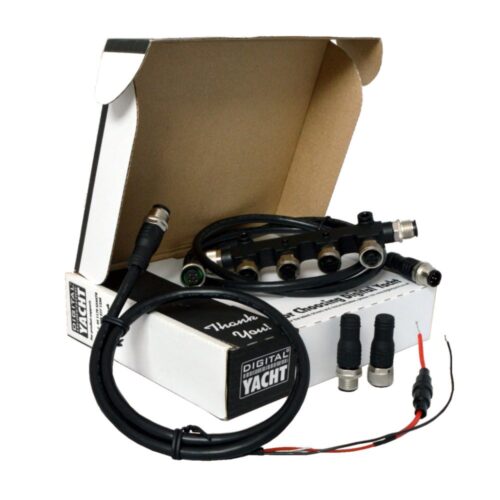
what inside box

  • GPS Antenna and 10m cable
  • 3dBi WiFi Antenna
  • PL259 patch cable for VHF
  • 0.8m NMEA 2000 drop cable (male)
  • 0.8m NMEA 0183 & Power cable
  • 0.8m USB cable
  • Product Video

    AIT6000 Introduction Video